Is a flat pouch cheaper than a stand up pouch of the same fill?
Usually, yes. A flat pouch uses less film and has fewer seals, so for small portions it is the lower cost option.
Flat pouches have no gusset, so they lie flat, stack in a carton and cost less per unit than a stand up pouch. Seven styles cover single serves, samples, vacuum packing and two-part products.
7 productsQuoted per order, from £0.25 a pouchFree design proofFree tracked UK delivery
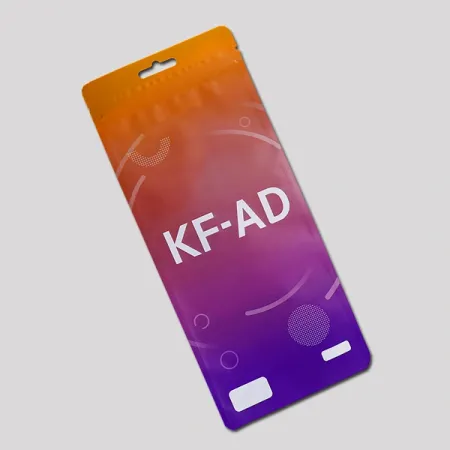 Three Side Seal Pouches
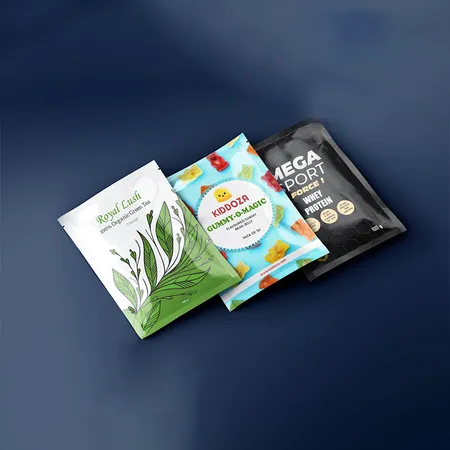 Printed Flat Pouches
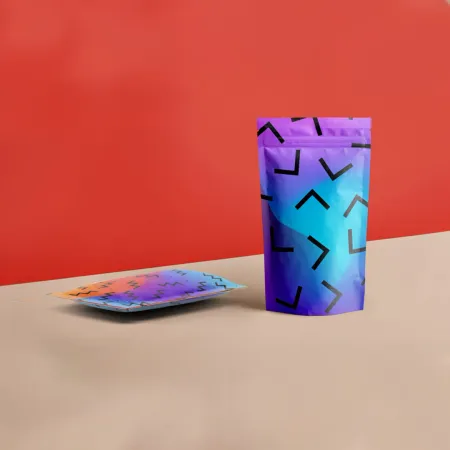 Printed Sachets
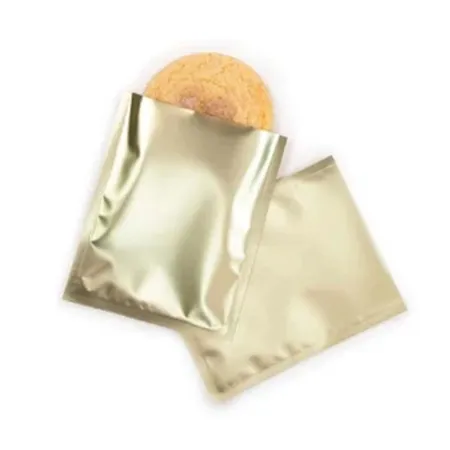 Heat Seal Foil Pouches
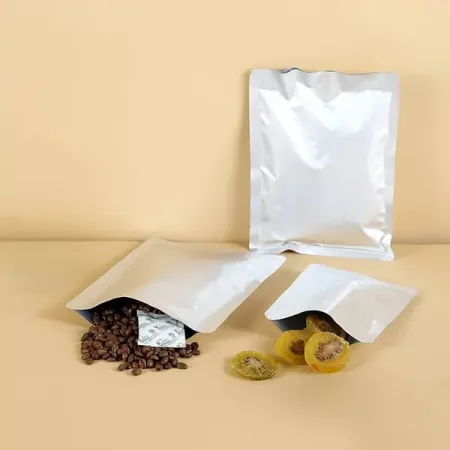 Vacuum Seal Pouches
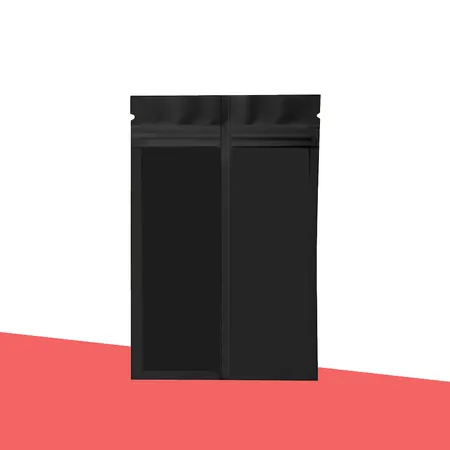 Dual Compartment Pouches
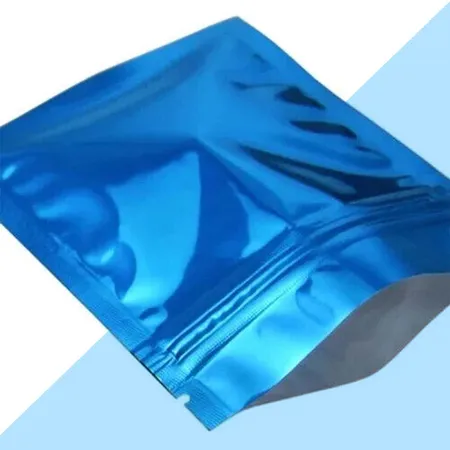 Zip Lock Foil Bags
A flat pouch is two sheets of film sealed together on three or four sides. There is no gusset, so it cannot stand up, but it lies flat for shelves, letterboxes, hang hooks and cartons.
The range runs from a 20 mm sachet for a single sample up to a 300 mm vacuum pouch for a side of cured meat.
Each style has a job. The table shows which one to look at first.
| Pouch | Best for | Key detail |
|---|---|---|
| Three Side Seal Pouches | Single serves, samples, face masks, hang hook retail | Sealed on three sides, open on one for filling |
| Printed Flat Pouches | Tea, sweets, protein single serves, promotional packs | Full colour print on both faces |
| Printed Sachets | 5 g to 50 g portions of powder, gel or seeds | Small, tear-open, printed front and back |
| Heat Seal Foil Pouches | Biscuits, wafers, bars and samples needing barrier | Plain or printed foil, sealed with a hand or bench sealer |
| Vacuum Seal Pouches | Coffee, cheese, cured meat, nuts | Smooth or channelled film for vacuum machines |
| Dual Compartment Pouches | Two parts sold together: mix and sauce, treat and chew | Two pockets with a seal between them |
| Zip Lock Foil Bags | Reclosable small packs of powder, sweets or tea | Flat foil bag with a press-to-close zipper |
Brands that sell single serves. A 30 g protein sample, a 10 g tea portion or a 25 g bag of sweets does not need a gusset.
Subscription and sample businesses like flat pouches because they fit through a letterbox. Cured meat, cheese and coffee producers use them for vacuum packing.
Anyone who needs a lot of units at a low unit cost ends up here. A three side seal pouch with a hang hole uses less film than any other printed pouch of the same width.
Flat pouches hold less than a stand up pouch of the same face size, because there is no gusset to open out. A rough rule is that a flat pouch holds about 60 percent of what a gusseted pouch of the same width and height holds.
The sizes here are quoted width by height in millimetres, with the seal width included.
For a sachet, the fill often fixes the size. A printed sachet for 5 g to 50 g is usually 50 to 90 mm wide.
| Fill | A common flat size (W × H) | Typical product |
|---|---|---|
| 5 g | 50 × 70 mm | Powder, seasoning, seeds |
| 25 g | 80 × 120 mm | Sweets, protein sample, tea |
| 50 g | 100 × 150 mm | Nuts, biscuits, face mask |
| 100 g | 120 × 180 mm | Sweets, granola bar, coffee sample |
| 250 g | 160 × 240 mm | Vacuum packed coffee or cheese |
| 500 g | 200 × 300 mm | Vacuum packed meat or bulk nuts |
The same laminates as the rest of the site apply, but flat pouches are often made thinner because they carry less weight. A sachet can be 70 to 90 microns where a 1 kg stand up pouch is 110 to 120.
Foil or metallised film is the choice for anything with fat, aroma or a long shelf life. Clear PET / PE suits products you want to show, such as sweets and pasta. Kraft / PET / PE gives a paper look for tea and seeds.
Vacuum pouches are different. They use a thicker PA / PE film, around 90 to 120 microns, that stretches around the product without pinholing. Ask on the quote if you need a food-contact, high-barrier or compostable option, as each is available on request.
Three side seal pouches are the plainest flat pouch and the one you see most on hang hooks. Three edges are sealed in the factory and the fourth is left open for you to fill.
They print edge to edge on both faces, so the back can carry ingredients, a barcode and a story while the front carries the brand. A hang hole or a round euro slot sits above the top seal.
Single serve protein, sheet masks, seed packets and sweets at a till are all typical. The full colour printed flat pouches show how far the print can go on this simple shape.
A sachet is small, usually under 100 mm, and torn open once. A heat seal foil pouch is a plain or lightly printed foil bag that you seal yourself. A bench sealer at 130 to 160 °C does the job.
Sachets are the better pick for a measured portion of powder, gel or seasoning. Heat seal foil pouches suit bakeries and small producers who pack bars, biscuits or trial sizes in batches.
Both are flat, both can be foil, and both are sealed on a line or by hand. The plain heat seal foil pouches page shows the open-top version with a tear notch.
Vacuum pouches go in a chamber or external vacuum machine. Chamber machines take smooth film. External machines need a channelled film so air can escape along the ribs.
Film thickness matters. Bones, hard cheese rinds and sharp coffee beans can pinhole thin film, so 100 microns or more is usual for anything with a hard edge.
Print is possible on the outer layer, but many producers run a plain vacuum pouch with a printed label. The vacuum seal pouches for coffee and cheese are offered smooth or channelled.
Some products are two things sold as one. A porridge mix with a separate sachet of fruit, a dog treat with a dental chew, a bath salt with a scrub. A dual compartment pouch holds both in one printed pack.
A seal runs between the two pockets so the contents stay apart until opened. Each pocket can have its own tear notch.
The dual compartment pouches with two pockets are made to the size of each half, so tell us both fill weights.
Most flat pouches are sealed once and torn open. A tear notch on one or both sides makes that easy. A hang hole above the seal suits retail.
A press-to-close zipper turns a flat pouch into a reclosable pack. That suits powders used over a week or sweets eaten over a few days.
The zip lock foil bags with a tear notch are the zippered member of this range. They lie flat but close again after each use.
Both faces print, and a flat pouch has no gusset to interrupt the design. Full colour digital handles small runs and several flavours in one order. Plate print suits runs in the tens of thousands.
On foil, a white under-print goes beneath the colours. Without it, a red prints as a dull bronze. On clear film, a white block can be printed where text needs to be read against the product.
Finishes are matte, gloss or soft touch. Metallic effect works well on sachets and small flat pouches because the small area keeps the cost sensible.
The common error is sizing a flat pouch like a stand up pouch and finding it holds too little. Weigh the product into a flat test bag before fixing the size.
Seal problems come next. Powder in the seal area stops the film bonding, and a zipper too close to the open edge leaves no room for the sealing jaw.
Send the product, the portion in grams or millilitres and the quantity. If it is a vacuum pouch, say which machine you use. If it is a dual compartment pouch, give both fills.
The written quote starts from £0.25 per unit and states the quantity for that order. Your free design proof shows both faces with the seal areas marked.
Making takes 4 to 6 business days after approval. UK delivery is free, tracked and takes 2 to 3 business days. A misprint or damaged delivery, reported with photos inside 10 days, gets a reprint or a refund.
Four short steps: pick a real pouch photo, place your logo on it, choose the colour and finish, and send it. Our designers turn it into a free print-ready proof.
Fill weight, closure, barrier and quantity decide the price. Send what you know and a packaging specialist comes back within one business day with a written quote and a free design proof.
| Price | Quoted per order, from £0.25 a pouch |
|---|---|
| Proof | Free, before anything is printed |
| Production | 4–6 business days after proof approval |
| Delivery | Free and tracked across the UK, 2–3 business days |
| Materials | Food-contact, high-barrier and compostable film options available on request |
Something else? Call +44 7578 382054, message us on WhatsApp or email info@shopmylarbags.co.uk.
Usually, yes. A flat pouch uses less film and has fewer seals, so for small portions it is the lower cost option.
Yes. A round or euro slot hang hole is punched above the top seal on three side seal and printed flat pouches.
Sachets from about 40 × 60 mm are practical, which suits 2 to 5 g of powder or seasoning.
External sealers need the channelled film. Tell us the machine and we quote the right film.
Yes. Each pocket is sized to its own fill, such as 40 g of mix and 10 g of topping.
Yes. Three sides are sealed and the top is left open for you to fill and seal on a hand or bench sealer.
Yes. Both faces print in full colour, with white under-print on the foil so colours stay bright.
Most are 70 to 100 microns, lighter than a stand up pouch, because they hold smaller portions.
Yes. A clear PET front with a printed foil or white back is a common choice for sweets and pasta.
A printed flat pouch under 25 mm thick when filled posts well. Most 50 g to 100 g pouches fit that.
Yes, a tear notch is cut into the side seal. Many producers also add a zipper on pouches over 250 g.
They are the no-gusset option. If the pouch must stand on a shelf, look at the stand up pouch range instead.