Are silver mylar bags the same as foil bags?
Near enough. Silver bags are foil or metallised bags with the bare metal left showing, while other foil bags carry a tint or a printed colour.
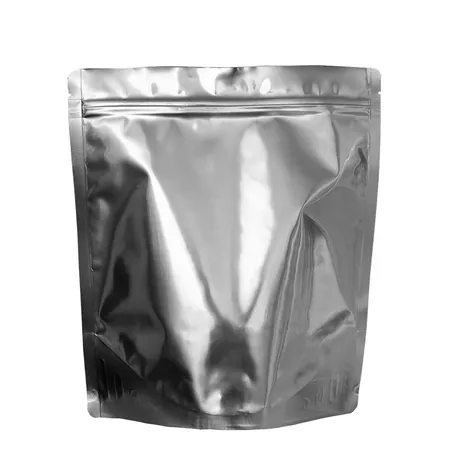
Quoted per order, from £0.25 a pouch
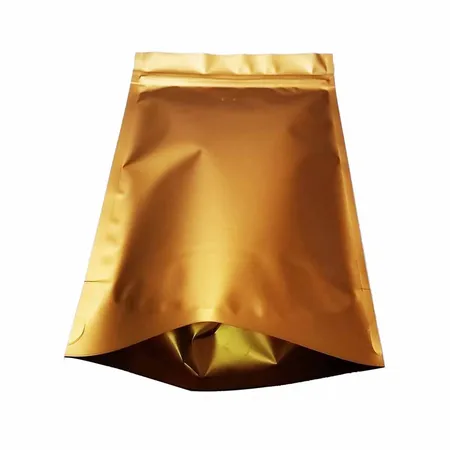
Bright silver foil bags with a zipper and tear notch, or large flat heat-seal bags for bulk packs. The plain silver face takes black or full colour print, and the film is the standard choice for anything stored with an oxygen absorber.
The short version
Silver mylar bags are metallised PET / PE or PET / foil / PE laminate bags with the bare metal face left showing. They block light and slow oxygen and moisture, which is why freeze-dried food, bulk coffee, protein and seed companies use them. We make them stand up with a zipper or flat for heat sealing, from 50 g to 5 kg, and print them with your design.
Key facts
| Spec | Standard | On request |
|---|---|---|
| Product | Silver Mylar Bags | Named variants quoted together |
| Range | Foil Mylar Bags | Matching pouches across the range |
| Style and seals | Stand up pouch with bottom gusset and zipper, or large flat heat-seal bag sealed on three sides | Alternatives quoted on request |
| Typical laminate | Metallised PET / PE for retail, PET / foil / PE for long-term storage, confirmed on the quote | Alternatives quoted on request |
| Typical sizes and fills | Often 130 × 210 mm + 70 mm for 250 g, 200 × 300 mm + 100 mm for 1 kg, 300 × 450 mm flat for 5 kg | Alternatives quoted on request |
| Closure | Press-to-close zipper with tear notch, or heat seal only on flat bulk bags | Alternatives quoted on request |
| Window or valve | Window on request; one-way degassing valve option for roasted coffee | Alternatives quoted on request |
| How it ships | Flat, top open, boxed for hand filling and impulse sealing | Alternatives quoted on request |
| Sizes | Cut to your fill weight or to the mm dimensions you send | Plain samples in the recommended size before a large run |
| Laminates | PET / foil / PE, metallised PET / PE or kraft / PET / PE, chosen for the product | Clear PET, BOPP or paper-feel films |
| Barrier | Matched to the product and the shelf life you tell us | High-barrier and food-contact film options, confirmed on the quote |
| Closures | Press-to-close zipper with a tear notch | Slider zipper, degassing valve, spout and cap, hang hole |
| Printing | Full colour digital with white under-print on foil and kraft | Plate print for long runs, spot colours and metallic inks |
| Finishes | Matte or gloss | Soft touch matte, spot gloss over matte, metallic effect |
| Windows | None | Clear or frosted, any shape inside the print area |
| Artwork | Vector PDF, AI or SVG placed on our dieline | We rebuild a PNG or JPG logo for print at no charge |
| Proof | Free, before anything is printed | As many revisions as it takes |
| Quantities | Priced for the number you ask for | A price ladder across three quantities |
| Fill weight | Size (W × H + gusset) | Good for |
|---|---|---|
| 250 g | 130 × 210 mm + 70 mm | Freeze-dried fruit, protein samples |
| 500 g | 160 × 240 mm + 80 mm | Granola, dried mushrooms, seed mixes |
| 1 kg | 200 × 300 mm + 100 mm | Bulk coffee, protein, rice |
| 2.5 kg | 250 × 380 mm flat | Bakery flour mixes, catering packs |
| 5 kg | 300 × 450 mm flat | Long-term dry food storage |
A silver mylar bag is the plainest form of foil bag. The metallised or foil layer is left bare on the outside, so the bag looks like polished metal with no tint and no lacquer colour.
Two laminates carry the name. Metallised PET / PE has a vapour-thin aluminium coat and suits retail bags. PET / foil / PE has a solid aluminium layer and suits storage bags that need to hold for years.
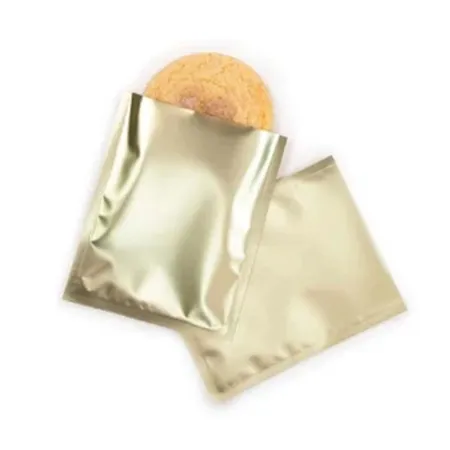
Both arrive flat and open at the top. Stand up versions have a bottom gusset and a zipper. Flat versions are sealed on three sides and closed with a heat sealer after filling.
Companies that care more about what the film does than how it looks. Freeze-dried food producers, bakeries buying bulk bags, protein brands and seed merchants make up most orders.
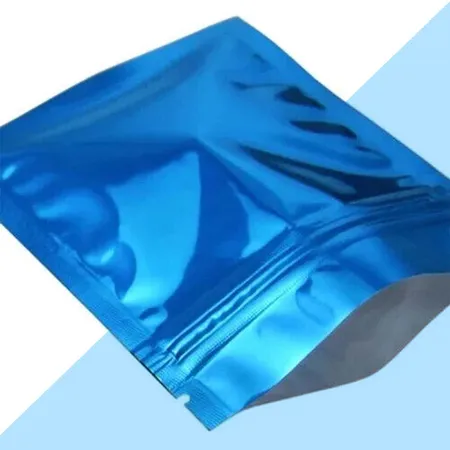
Silver is one finish among several, and our range of foil mylar bags shows it beside gold, black and printed options.
They look the same on the shelf. The difference shows over months, when a thin metallised layer lets a little more oxygen and moisture through than a solid foil layer does.
| Laminate | Barrier | Choose it when |
|---|---|---|
| Metallised PET / PE | High | Retail bags sold within a year, lighter and cheaper |
| PET / foil / PE | Very high | Storage bags, oxygen absorbers, multi-year dates |
| PET / foil / nylon / PE | Very high | Heavy fills and sharp products such as pasta |
| Metallised PET / PE with window | Medium | Retail bags where the product must show |
A 1 kg stand up silver bag is often 200 × 300 mm with a 100 mm gusset for a product such as coffee beans or rice. Lighter products such as freeze-dried fruit or puffed cereal need a bigger bag for the same weight.
Flat bulk bags for 2.5 kg and 5 kg run 250 × 380 mm and 300 × 450 mm. They are sealed flat, so the length allows for the product settling and a wide top seal.
The fill weight alone does not settle the size. Tell us the product and we size the bag to its density, as explained in our guide to UK stand up pouch sizes.
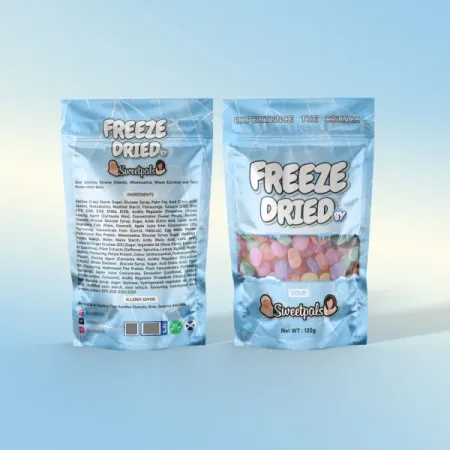
Freeze-dried food is light, dry and keen to take moisture back from the air. A silver foil bag with an oxygen absorber sachet inside, heat sealed, is how most UK producers pack it.
The heat seal matters more than the zipper for storage. The zipper keeps the bag closed day to day, but the heat seal above it is what holds the barrier for years.
Thicker laminates with a solid foil layer suit the longest dates, and a nylon layer adds puncture resistance for sharp pieces. The options and pouch shapes are compared on our freeze-dried food bags page.
Retail bags get a zipper. The customer opens the bag at the tear notch, uses some and presses the zipper shut. A slider is an option on larger bags that are opened daily.
Bulk and storage bags are usually heat seal only. There is no need for a zipper on a 5 kg bag of flour that a bakery empties into a bin, and leaving it off lowers the price.
A valve is the third option, for roasted coffee only. Beans release gas for days after roasting, and a one-way valve lets it out without letting air in.
Ink printed straight onto silver takes on a metallic sheen. Black looks sharp and is the most common one-colour choice. Red, blue and green look like coloured metal, which some brands like.
For true brand colours or a white panel, we lay down a white under-print first. The colours then print as they do on paper, with the silver showing only where the design leaves it bare.
Our designers set the artwork on the dieline and send a free proof. Bleed, seal areas and file formats are listed in our artwork guide for foil pouches.
Most silver bags are filled by hand and closed with an impulse sealer. The routine takes seconds once the heat setting is right.
Sealing over powder is the first. Protein or flour on the seal area leaves a channel, and the bag slowly lets air in. Fold the top over while filling or use a funnel.
Creasing the bag hard is the second. A sharp fold in a thin metallised film can open pinholes in the metal layer. Store empty bags flat and do not crush them in a drawer.
The third is using a thin bag for sharp or heavy products. Dried pasta and hard biscuits punch through a light laminate in transit. Ask for a thicker structure or a nylon layer.
Bakeries use large flat silver bags in two ways. Part-baked baguettes and rolls go into a foil bag for freezing, where the film keeps freezer smells and moisture off the bread.
Flour blends and bread mixes go into 2.5 kg and 5 kg bags for sale to home bakers and cafes. The silver face takes a simple black print with the mix name and the method.
Smaller bakery lines such as biscuits and cookies sit better in a retail zipper bag, which is a separate product on our cookie and biscuit bags page.
Send the product, the fill weight, stand up or flat, zipper or heat seal, and how many you need. Quantities are quoted per order, from £0.25 per unit, confirmed in writing.
Plain silver bags with no print are quoted the same way. Printed bags get a free design proof before anything is run.
Production takes 4–6 business days after approval, then free tracked UK delivery in 2–3 business days. Misprints or damage reported within 10 days with photos are reprinted or refunded. Use the quote request page for foil bags or send a WhatsApp.
Four short steps: pick a real pouch photo, place your logo on it, choose the colour and finish, and send it. Our designers turn it into a free print-ready proof.
Fill weight, closure, barrier and quantity decide the price. Send what you know and a packaging specialist comes back within one business day with a written quote and a free design proof.
| Price | Quoted per order, from £0.25 a pouch |
|---|---|
| Proof | Free, before anything is printed |
| Production | 4–6 business days after proof approval |
| Delivery | Free and tracked across the UK, 2–3 business days |
| Materials | Food-contact, high-barrier and compostable film options available on request |
Something else? Call +44 7578 382054, message us on WhatsApp or email info@shopmylarbags.co.uk.
Near enough. Silver bags are foil or metallised bags with the bare metal left showing, while other foil bags carry a tint or a printed colour.
Yes. We lay white ink under the design first so your colours print true, leaving bare silver only where the artwork asks for it.
Yes. A heat-sealed silver bag with an absorber inside is the standard pack for freeze-dried and long-term dry food.
A hard crease in a thin metallised film can open pinholes in the metal layer. Store empty bags flat and choose solid foil for long storage.
Yes, on request. A window lowers the barrier a little, so it suits retail bags sold within months rather than storage bags.
Retail metallised bags are often 90 to 110 microns in total, and storage bags with solid foil often 120 to 150 microns. We confirm on the quote.
An impulse sealer is far more reliable and costs little. An iron scorches the film and leaves an uneven seal.
Yes. Large flat silver bags are used for freezing part-baked bread, and flat 2.5 kg bags for flour and bread mixes.
Yes. Flat bags around 300 × 450 mm for 5 kg are common, and larger sizes are quoted on request.
Yes. A matte lacquer over the metal gives a brushed look. Bright silver stays the default because it costs less.
Fresh roasted beans still give off gas, so a bag without a valve swells. Our guide to coffee bag valves explains when a valve is needed.
Yes. Seed merchants use flat silver bags with a tear notch because the foil keeps light and damp off the seed until planting.