Will dried meat treats mark the outside of the pouch?
Not through a foil or metallised laminate. Fat migrates through thin clear film, so choose a barrier laminate for oily treats.
Quoted per order, from £0.25 a pouch
Stand up pet food pouches with a zipper, a window for the treats and a hang hole for the pet shop peg. Printed with your brand and sized from a 70 g treat pack to a 2 kg kibble bag.
The short version
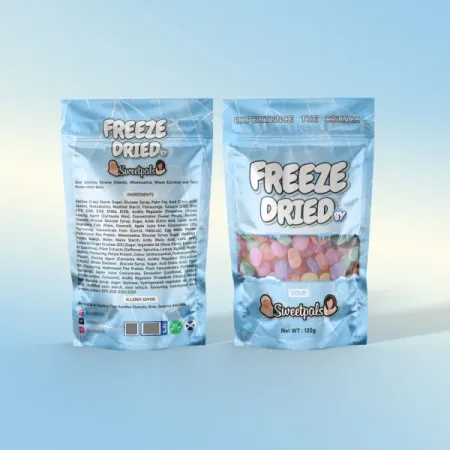
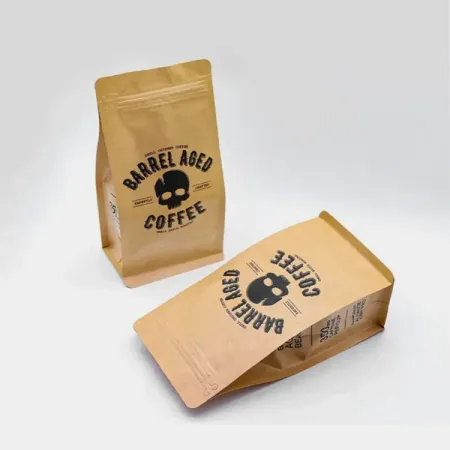
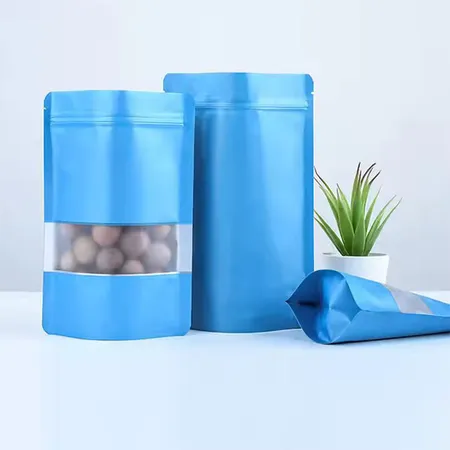
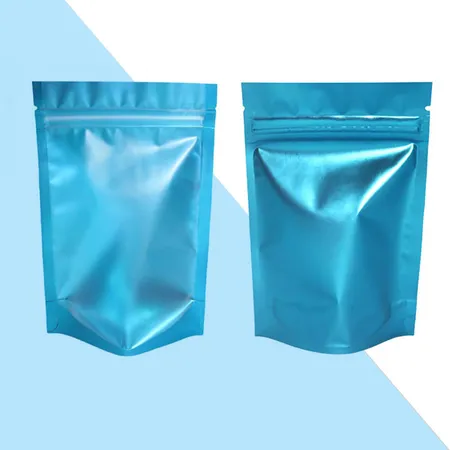
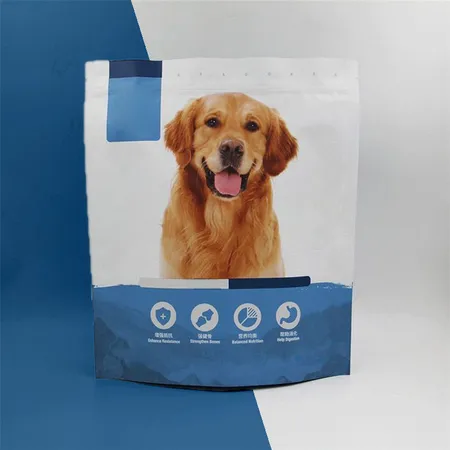
Pet food pouches are high-barrier stand up pouches for dry pet food: dried meat treats, biscuits, kibble, freeze-dried pieces and training treats. They use a foil or metallised layer to keep fat and aroma in and air out, a zipper so the owner can reseal, and often a window or hang hole. The photos show treat pouches with windows and a larger kibble pouch.
Key facts
| Spec | Standard | On request |
|---|---|---|
| Product | Pet Food Pouches | Named variants quoted together |
| Range | Pouches by Product | Matching pouches across the range |
| Style and seals | Stand up pouch with bottom gusset; flat bottom bag for kibble above 1.5 kg | Alternatives quoted on request |
| Typical laminate | Matte or gloss BOPP / metallised PET / PE, PET / foil / PE for fatty treats | Alternatives quoted on request |
| Typical sizes and fill weights | 70 g treats about 100 × 170 + 60 mm; 250 g about 140 × 220 + 80 mm; 1.5 kg kibble about 220 × 330 + 120 mm | Alternatives quoted on request |
| Closure | Press-to-close zipper with tear notch; slider zipper option on large bags | Alternatives quoted on request |
| Window and hang hole | Clear or frosted window, paw or bone shapes on request; round or euro hang hole | Alternatives quoted on request |
| How it ships | Flat, top open, hang hole punched, in cartons | Alternatives quoted on request |
| Sizes | Cut to your fill weight or to the mm dimensions you send | Plain samples in the recommended size before a large run |
| Laminates | PET / foil / PE, metallised PET / PE or kraft / PET / PE, chosen for the product | Clear PET, BOPP or paper-feel films |
| Barrier | Matched to the product and the shelf life you tell us | High-barrier and food-contact film options, confirmed on the quote |
| Closures | Press-to-close zipper with a tear notch | Slider zipper, degassing valve, spout and cap, hang hole |
| Printing | Full colour digital with white under-print on foil and kraft | Plate print for long runs, spot colours and metallic inks |
| Finishes | Matte or gloss | Soft touch matte, spot gloss over matte, metallic effect |
| Windows | None | Clear or frosted, any shape inside the print area |
| Artwork | Vector PDF, AI or SVG placed on our dieline | We rebuild a PNG or JPG logo for print at no charge |
| Proof | Free, before anything is printed | As many revisions as it takes |
| Quantities | Priced for the number you ask for | A price ladder across three quantities |
| Fill weight | Size (W × H + gusset) | Good for |
|---|---|---|
| 70 g dried treats | 100 × 170 + 60 mm | Till point and trial packs |
| 150 g biscuits | 120 × 200 + 70 mm | Standard treat pouch |
| 250 g jerky strips | 140 × 220 + 80 mm | Long strips standing on end |
| 500 g kibble | 160 × 250 + 90 mm | Small breed and sample bags |
| 1.5 kg kibble | 220 × 330 + 120 mm | Flat bottom bag suggested |
Dried pet food is oily, strong smelling and often sold in a shop full of other strong smells. The pouch has to keep fat from marking the print and keep the aroma inside the bag.
It also needs to survive being opened every day for a month. A zipper that takes crumbs and fat without failing is as important as the barrier.
Freeze-dried raw treats are lighter and more fragile than baked ones. They have their own page at freeze dried food bags for raw treats.
The brands we print for sell through pet shops, vets, online marketplaces and their own websites. Most started with a single treat and grew into a range.
Nearly all pet pouches need a zipper. The ways a zipper can be fitted are compared on the resealable zipper pouch page.
Treats vary in shape more than almost any other product. Chicken jerky strips are long and flat, while liver cubes are small and dense. The same 250 g needs a different pouch for each.
Long strips do best standing on end in a tall pouch, so they do not snap. Cubes and biscuits can go in a shorter, wider pouch.
Weigh a batch, measure its loose volume, and we size the pouch with 30 percent headspace. Dimensions by weight are listed in the UK pouch size and fill weight guide.
| Treat | 250 g pouch | Reason |
|---|---|---|
| Chicken jerky strips | 130 × 240 + 80 mm | Tall, strips stand on end |
| Liver training cubes | 120 × 190 + 70 mm | Dense, settles flat |
| Baked biscuits | 140 × 220 + 80 mm | Air between pieces |
| Fish skin twists | 150 × 240 + 90 mm | Bulky, irregular shapes |
Dried meat treats carry fat that migrates through thin film. On a paper-faced bag it shows as dark patches within days; on a clear bag it looks greasy.
A PET / foil / PE laminate blocks fat, oxygen and smell. Metallised PET costs less and suits baked biscuits and kibble, which carry less fat.
Food-contact and high-barrier film options are available on request and confirmed on the quote. The guide to barrier films for food explains the trade-offs.
A window lets an owner see the treat. For meaty pieces it sells the product, and for kibble it shows the size of the pieces for a small dog.
A hang hole matters if you sell through pet shops, where treat pouches hang on pegs by the till. We punch a round or euro slot above the tear notch. Treat pouches sold mainly online can skip both the window and the hang hole and put the money into a stronger laminate.
The zipper is almost always needed. Shaped windows, paw prints and bones included, are shown on the window pouch page.
Up to 1 kg, a stand up pouch with a zipper works well and stands on a shelf. The white and blue kibble pouch in the photos is that style.
From 1.5 kg a flat bottom bag is steadier. The square base stops the bag toppling as kibble is scooped out, and the side gussets give extra print space.
Both styles take a slider zipper on request, which owners find easier on a big bag. See the flat bottom pouches for kibble for sizes at 2 kg and above.
Pet shop shelves are busy, so a clear brand, a photo or illustration of the animal, and the treat name in large type do most of the work. The pouches in the photos use one strong colour and a dog on the front.
The back panel carries the composition, analytical constituents, feeding guide and your contact details. Keep that text in a colour that reads against the background.
White under-print keeps bright colours bright on metallised film. The margins and file types we need are in the printed pouch artwork guide.
Oily treats leave a film on the seal area and on the zipper. These steps keep the seal clean.
For the fattiest treats, such as pork crackling or salmon skin, choose a foil laminate. The foil stand up pouches for oily treats suit them best.
Choosing a clear pouch for liver treats is the most common. The fat clouds the film within a week and the pack looks tired on the peg.
Sizing a pouch to the weight rather than the shape is another. Long strips in a short pouch snap into pieces.
Leaving the hang hole off a pouch sold through pet shops costs facings. For big wholesale kibble, the side gusset bags for bulk kibble are the usual format and skip the hang hole altogether.
Send us the treat or food, the fill weight, the shape of the pieces, and whether you want a window and hang hole. Orders are quoted individually, from £0.25 per unit, and confirmed in writing.
A free design proof shows the window position, hang hole and seal lines. Once you approve it, production takes 4–6 business days.
Delivery is free and tracked to UK addresses in 2–3 business days. If a pouch turns up misprinted or torn, photos within 10 days get it reprinted or refunded. Ask through the pet food pouch quote page.
Four short steps: pick a real pouch photo, place your logo on it, choose the colour and finish, and send it. Our designers turn it into a free print-ready proof.
Fill weight, closure, barrier and quantity decide the price. Send what you know and a packaging specialist comes back within one business day with a written quote and a free design proof.
| Price | Quoted per order, from £0.25 a pouch |
|---|---|
| Proof | Free, before anything is printed |
| Production | 4–6 business days after proof approval |
| Delivery | Free and tracked across the UK, 2–3 business days |
| Materials | Food-contact, high-barrier and compostable film options available on request |
Something else? Call +44 7578 382054, message us on WhatsApp or email info@shopmylarbags.co.uk.
Not through a foil or metallised laminate. Fat migrates through thin clear film, so choose a barrier laminate for oily treats.
Yes, shaped windows are cut on request. The proof shows the exact size and position.
A foil or metallised layer keeps aroma in and other smells out. The zipper seals the top between feeds.
Around 200 × 300 mm with a 110 mm gusset for standard pieces. Large-breed kibble needs more room.
Yes, the hang hole sits above the tear notch and the zipper sits below it. Most pet shop pouches have both.
Many owners find a slider easier on a large bag. It is an option on request and shown on the quote.
Yes, the back panel has room for composition, constituents, feeding guide and your contact details. Our designers lay it out.
Yes, 50 g to 100 g pouches around 90 × 150 mm are common for cat treats. They take a hang hole and a zipper.
Yes, digital print changes the flavour panel within one run. The pouch size and laminate stay the same.
Food-contact film is available on request and confirmed on the written quote. Tell us the product when you ask.
Yes, pre-made stand up pouches suit hand filling and pouch filling machines. Send the machine spec and we match the pouch.
Report it within 10 days with photos and we reprint or refund. The steps are on our reprint and refund process page.